

Today, automation tools have become integral to companies seeking to streamline operations and increase efficiency. In recent years, these tools have become in high demand, because companies felt the need to improve and speed up their work and establish relationships with customers and partners. For the business to stay afloat in the future, companies must have systems such as CRM, SaaS, ERP, etc. They help automate routine tasks, reduce human error, and improve work processes.
What’s the difference between CRM, SaaS, and ERP, and can these web projects work together and be part of each other? More answers in a new blog post.
Understanding SaaS
As we mentioned in one of the previous articles, SaaS (Software as a Service) is a type of web solution that runs on the providers’ server, and the user has access to the services for a separate payment(subscription) or for free. Such a solution is fast, convenient, and economical for those who do not want to spend extra money and time on developing a separate application for the company but want to use a ready-made solution. In addition, SaaS platforms are easy and intuitive to use.Technical support and platform updates are provided by the provider itself.
The most famous examples of SaaS platforms are Shopify, Slack, Netflix, Canva, etc.
How CRM System Improves Customer Relationship
CRM (Customer Relationship Management) is a system that allows you to manage customer data. It is a combination of practices, strategies, and technologies that a company uses to manage and analyze customer data. The main purpose of using CRM is to improve customer service, promote customer retention, and increase sales.
As for CRM, it is the management of employee lists and access levels. Such systems contain configuration options, whatever site pages a user can enter. CRM systems can be used for both employee and customer management.
For example, let’s take the same EZ-Estimate, which has a CRM system on the backend in the form of a dashboard. The client can write to the site or to the mail, and the message will be displayed on the dashboard. And you can respond to these messages, and you can also see some orders that are placed on the site.
The CRM system includes the following main components:
- contact management is a segment that allows you to record, store, and use customer contacts that are stored in a centralized database. Client data here includes names, phone numbers, addresses, social media accounts, etc. Contact management speeds up customer communication management and the delivery process.
- artificial intelligence is used to generate predictions of the results of the company’s commercial activities, personalize work with the client, etc.
- sales management includes sales control over all processes: from lead generation to closing a trade agreement. In particular, this includes tools for tracking the sales process, predicting the sales results of a particular product, etc.
- work automation is a set of tools that automates routine work processes and speeds up business operations. With the automation of routine tasks, the level of workload on workers decreases, as well as the percentage of human error in work.
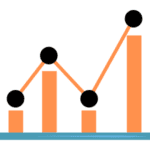
- reports and analytics. CRM systems have tools for generating reports that track customer behavior, campaign success, latest sales trends, etc.
Depending on the direction of work, there are three types of CRM systems: operational, analytical, and collaborative. The first includes systems that optimize day-to-day operations such as customer communication, marketing, and sales automation, etc. These systems are primarily aimed at improving work with clients and simplifying the above processes.
THE MAIN COMPONENTS OF CRM SYSTEM

CONTACT MANAGEMENT
Contact management is a segment that allows you to record, store, and use customer contacts that are stored in a centralized database. Client data includes names, phone numbers, addresses, social media accounts, etc.
ARTIFICIAL INTELLIGENCE
Artificial intelligence is used to generate predictions of the results of the company’s commercial activities, personalize work with the client, etc.


SALES MANAGEMENT
Sales management includes sales control over all processes: from lead generation to closing a trade agreement. In particular, this includes tools for tracking the sales process, predicting the sales results of a particular product, etc.
WORK AUTOMATION
Work automation is a set of tools that automates routine work processes and speeds up business operations. With the automation of routine tasks, the level of workload on workers decreases, as well as the percentage of human error in work.
REPORTS AND ANALYTICS
CRM systems has tools for generating reports that track customer behavior, campaign success, latest sales trends, etc.